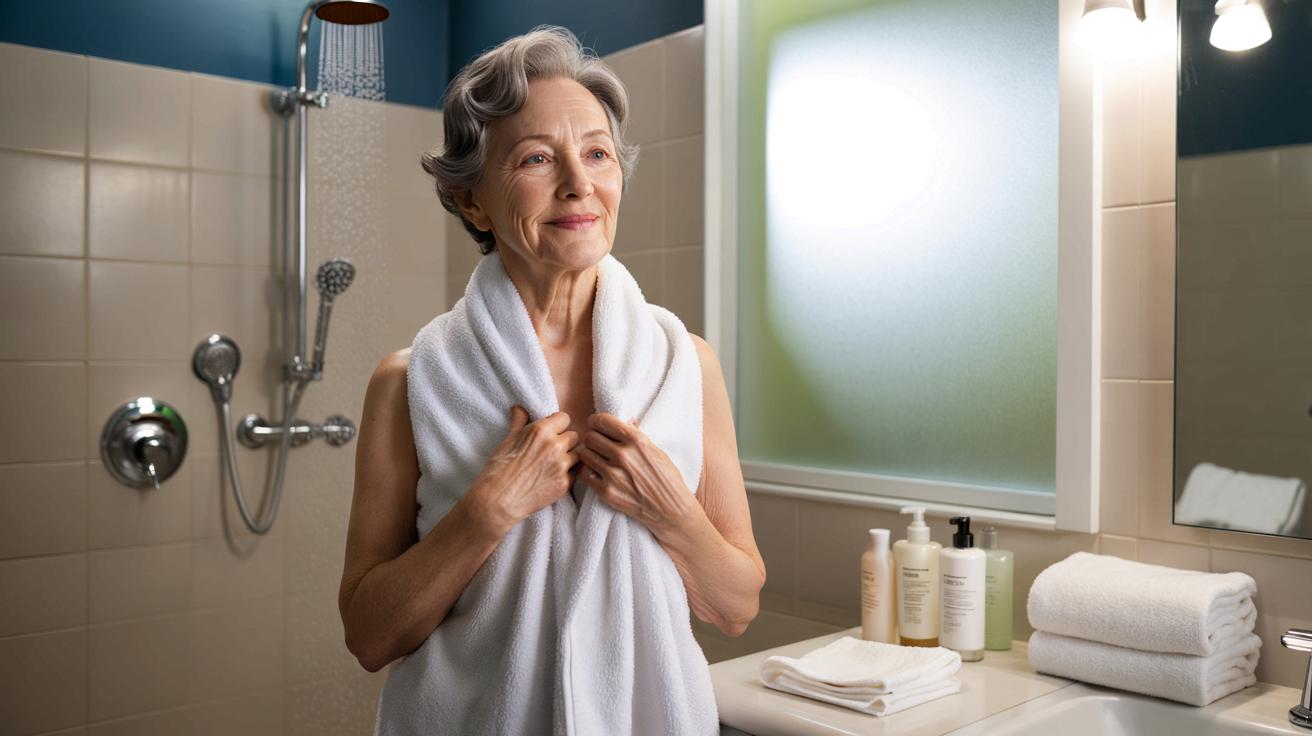
The tiles are colder, the legs are slower, and suddenly even turning on the shower becomes a decision instead of a reflex.
For many people past 65, hygiene stops being a simple daily habit and becomes a question of skin, strength and safety. Doctors are quietly revising old rules, families often don’t know what to advise, and older adults themselves are left wondering how clean is “clean enough” without paying for it with dry skin and exhaustion.
The age when daily showers stop being the gold standard
Most of us grew up with one clear message: a proper adult showers every day. By retirement age, that rule starts to clash with reality. Skin is thinner and drier, soap stings more easily, and standing under hot water for 15 minutes can leave you dizzy rather than refreshed.
Geriatric specialists are seeing the same pattern in clinics and care homes. People who cling to daily, full-body showers arrive with cracked heels, red patches on their shins and endless itching. The good news: the fix is often as simple as changing the timetable.
The routine that keeps older adults healthiest is usually two to three full-body showers a week, plus focused washing of key areas every day.
This rhythm aims to protect the “skin barrier” — a thin layer of oils, cells and friendly microbes that works like natural armour. Over-washing with hot water and scented gels strips that protection away. Once it’s gone, bacteria slip in through micro-cracks, and what started as “feeling squeaky clean” becomes weeks of irritation or even infection.
Why the body changes after 65
Ageing doesn’t just add wrinkles; it changes how skin behaves. Oil production drops. The outer layer becomes more fragile. Blood circulation slows, so tiny injuries take longer to heal. At the same time, joints stiffen and balance weakens, which turns twisting, bending and standing on one leg in the shower into a risky workout.
That means hygiene has to hit a new balance between three things: cleanliness, comfort and safety. Washing too rarely raises the risk of odour, fungal infections and urinary tract problems. Washing too often can open the door to the very same issues by damaging skin.
The sweet spot: what “two to three showers a week” really means
Experts describe a pattern that looks something like this:
- Full-body showers: Two or three times a week, on planned “anchor days”.
- Daily washing at the sink: Every day, even on non-shower days.
- Target areas: Face, underarms, groin, bottom, feet and hands.
- Hair: Usually once a week, unless advised otherwise by a doctor.
On a full-shower day, the goal is not a spa-level scrub. Lukewarm water, not hot. A gentle, fragrance-free cleanser for sweaty or moist areas, and just water for the rest. Then a soft towel, patting instead of rubbing, and a simple moisturiser on arms, legs and torso.
➡️ Psychology confirms it: real inner peace comes when you stop expecting this from others
➡️ “I thought it was just tiredness”: the daily habit that was quietly draining my energy
Think of these showers as maintenance, not punishment: short, regular and kind to the skin instead of long, scalding and exhausting.
On the “in-between” days, hygiene happens at the sink or sitting on a stool. A flannel or washcloth, a small basin of warm water, and a quick focus on the areas that most need attention. Five minutes is usually enough, and the body ends up just as healthy as with a daily, head-to-toe soak.
What a realistic weekly routine can look like
No two people age in exactly the same way, so there’s no universal calendar. Yet some simple structures help many older adults stay on track.
| Day | Type of hygiene | Key focus |
|---|---|---|
| Monday | Light wash | Face, underarms, groin, feet, hands |
| Tuesday | Full shower | Whole body, moisturiser afterwards |
| Wednesday | Light wash | Target areas, quick hairline rinse if needed |
| Thursday | Light wash | Extra care to feet and skin folds |
| Friday | Full shower | Whole body, check skin for redness or sores |
| Saturday | Light wash | Freshen up before visits or outings |
| Sunday | Optional full shower | Weekly hair wash if needed |
This sort of template can be moved around to suit habits, carers’ visits or medical appointments. Some older adults prefer a shower after a weekly exercise class. Others choose days when a partner or neighbour is nearby, just in case they need help.
Products and tricks that make a big difference
The frequency of showers is only half the story. What touches the skin matters just as much.
- Soap choice: Mild, unscented cleansers cause less drying than perfumed gels or antibacterial bars.
- Water temperature: Tepid water keeps blood pressure more stable and preserves natural oils.
- Cloths and sponges: Soft flannels washed regularly reduce the risk of harbouring bacteria.
- Moisturiser: A basic, fragrance-free cream used after showers helps restore the barrier.
For many people over 65, cutting back on harsh products does more for freshness and comfort than adding extra showers ever could.
Safety tools matter too. A non-slip mat on the shower floor, grab bars by the entrance and a stable stool inside the cubicle can turn washing from a fear into a routine act again. Poor lighting, tangled bathmats and clutter raise the fall risk more than most families realise.
When skipping the shower signals something deeper
Relatives often notice a change in hygiene first. A once tidy parent starts stretching showers over ten days, or insists they “already washed” when it clearly isn’t true. That shift can have many causes: joint pain, shortness of breath, mild cognitive decline, low mood or simple embarrassment about needing help.
Pushing for daily showers rarely solves the problem. Gentle questions do more: is the water too cold? Are they scared of slipping? Does lifting their arms hurt? Are they exhausted after walking from bedroom to bathroom?
Professionals recommend adapting the routine before conflict sets in. Switching to mostly sit-down washes with just two supervised showers a week can preserve both hygiene and dignity. In some cases, occupational therapists can assess the bathroom and suggest low-cost changes, from rail placements to handheld shower heads.
Questions older readers often ask
- Will I smell if I only shower two or three times a week? With daily washing of underarms, groin, feet and use of clean clothes, most people stay fresh. Strong odour can signal infection, certain foods or medication side-effects rather than simple sweat.
- Can I still enjoy long hot baths? Occasional baths are fine for many, but very hot, frequent soaks dry the skin and may cause dizziness when standing up. Shorter, warm baths with help nearby are safer.
- Do I need special “senior” soaps and lotions? Often, no. Plain, gentle products without strong perfume usually perform as well as expensive “age-branded” options.
Practical scenarios: adjusting routines without losing dignity
Imagine a 79-year-old living alone with mild arthritis. She finds showering painful but hates feeling unkempt. A realistic plan might be two showers a week on days when a neighbour is at home next door, plus daily seated washes at the sink. Clothes are laid out in advance to shorten the standing time. She keeps her independence while reducing the strain.
Now think of an 82-year-old with early dementia who keeps forgetting when he last showered. A calendar with small symbols (a blue drop for full shower, a yellow sun for light wash) stuck in the bathroom can help him track his effort and gives carers a discreet way to check. The focus shifts from policing to gentle prompting.
These small adjustments often prevent larger health problems. Clean, dry feet reduce fungal infections that can spread between toes. Regular checks while washing reveal pressure sores early in people who sit a lot. Comfortable, intact skin helps maintain sleep, because constant itching at night slowly erodes rest and mood.
Terms and risks worth understanding after 65
Two medical phrases appear often in conversations about hygiene and ageing. One is “skin barrier”. This refers to the outermost layer of skin that keeps moisture in and germs out. Aggressive washing, very hot water and rough towels wear this barrier away. Once weakened, it takes longer to repair in older adults.
The second term is “orthostatic hypotension”, which means blood pressure dropping suddenly when you stand up. Hot showers and long standing in steam can trigger it. The result can be a dangerous faint on hard tiles. Shorter showers with a seat, and a moment of sitting on the bed afterwards before walking off, limit that risk.
Hygiene habits built in youth rarely match the needs of a body in its seventies or eighties. Letting go of the daily-shower badge is less about lowering standards and more about matching care to reality. Two or three well-planned showers a week, backed by smart daily washing, often keep older people healthier — and surprisingly, feeling cleaner — than the old “once a day, no matter what” rule ever did.