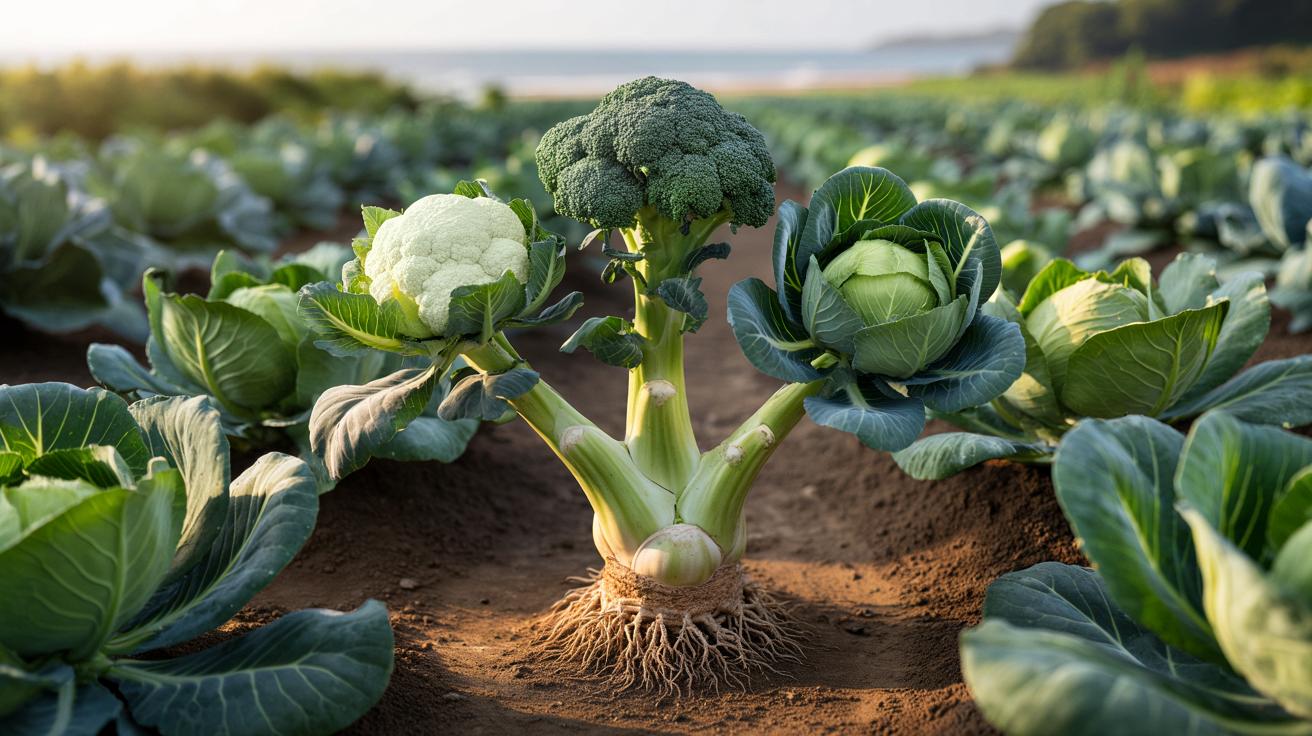
At the supermarket, they sit in separate crates like distant cousins at a wedding, each with its own price, label and stereotype.
Broccoli is the “healthy” one, cauliflower the bland one, cabbage the smelly one. Yet behind those reputations hides a quiet botanical twist that can change how you shop, cook and think about what lands on your plate.
One wild plant hiding in plain sight
Cauliflower, broccoli and cabbage look so different that most of us assume they’re unrelated. One is pale and bumpy, one grows in green florets, one forms a tight leafy ball. Different shapes, different recipes, different mental boxes.
They are, in fact, the same species: Brassica oleracea.
Cauliflower, broccoli and cabbage are not three separate plants, but three human-shaped versions of a single coastal species.
That species started life as wild cabbage on tough, windy European coastlines. Over centuries, farmers noticed small differences: a plant with bigger leaves, a stalk with chunkier buds, a tighter knot of developing flowers. They saved seeds from the plants they liked and replanted them.
Generation after generation, those tiny choices built up. Focus on large leaves, and you end up with cabbages and kales. Select tight clusters of immature flower buds, and you arrive at broccoli and cauliflower. It’s the botanical equivalent of remixing one track into several versions for different playlists.
How human taste rewrote a single species
Biologists call these versions “cultivars” or “cultivar groups”. They’re not different species, just different lines bred to look and behave a certain way.
- Broccoli: bred for branching green flower buds on thick stalks.
- Cauliflower: bred for dense, compact heads of undeveloped flower tissue.
- Cabbage: bred for tight balls of thickened leaves.
The DNA behind them is remarkably similar. The differences are like edits in a document rather than a whole new file. Change where the plant invests its energy — leaf, bud, flower — and you change the vegetable without changing its species.
This kind of transformation is not unique to brassicas. The same process turned the wild ancestor of maize into sweetcorn, and a small sour fruit into modern apples. But cauliflower, broccoli and cabbage are one of the clearest examples you can see on a single supermarket shelf.
➡️ Polar bears in Norway’s Arctic are getting fatter and healthier despite the climate crisis
➡️ “I thought it was just tiredness”: the daily habit that was quietly draining my energy
➡️ Psychology confirms it: real inner peace comes when you stop expecting this from others
Why this matters in your kitchen
Knowing they’re the same species isn’t just pub quiz material. It gives you a powerful bit of freedom when you cook and shop, especially on a tight budget.
Think less in terms of “I need broccoli” and more in terms of “I need something from the brassica family that can take high heat and strong flavours”.
Because they share a genetic base, they share a cooking personality. All three:
- Handle roasting and pan-frying without falling apart.
- Love strong seasonings such as garlic, chilli, soy sauce and lemon.
- Bring similar nutrients: vitamin C, fibre, and sulphur-containing compounds linked to long-term health benefits.
That means many recipes are more flexible than they look. A creamy “broccoli” soup works just as well with cauliflower. A cabbage stir-fry can easily absorb sliced broccoli stalks. A cauliflower roast can be swapped for thick wedges of cabbage brushed with oil and spices.
Smart swaps that cut waste and save money
Food prices move faster than recipes do. One week broccoli is cheap and piled high; the next week it’s almost a luxury. Cabbage often stays low-cost, and cauliflower swings in between. Seeing them as interchangeable options within one species lets you play the market instead of being trapped by it.
Everyday brassica cheat sheet
- Use cabbage where you’d normally use noodles in a stir-fry: thinly shred, fry hot, add sauce at the end.
- Swap broccoli with cauliflower in pasta bakes and cheese gratins for a slightly sweeter, softer bite.
- Slice broccoli and cauliflower stems into coins and use them in curries or stews instead of throwing them away.
- Charred cabbage wedges can stand in for big cauliflower “steaks” on the grill.
These swaps work because the vegetables respond similarly to heat and seasoning, even if their textures differ. You’re not breaking the rules of cooking, just bending them around your fridge contents.
Roasting, frying, steaming: one playbook, three vegetables
Many people carry childhood memories of brassicas boiled into a soft, grey fate. That method pulls out sulphur compounds and creates the strong smell that puts some people off. A few simple changes flip the experience.
| Method | How to use it | Best results with |
|---|---|---|
| Roasting | High heat, plenty of oil, spread out on a tray until edges brown | Cauliflower florets, broccoli florets, cabbage wedges |
| Stir-frying | Hot pan, fast cooking, strong sauces | Shredded cabbage, sliced stems, small florets |
| Steaming | Short cooking, then finish with butter, herbs or olive oil | Broccoli and cauliflower when you want a gentler texture |
| Slow braising | Cooked slowly in stock or tomato sauce | Cabbage, especially tougher outer leaves |
High heat and bold seasoning turn “duty vegetables” into something people actually want to eat, often without changing the basic ingredient.
Nutrition: different shapes, shared benefits
Because they come from the same species, cauliflower, broccoli and cabbage share broad nutritional traits. They are low in calories, high in fibre, and provide vitamin C and vitamin K. They also contain compounds called glucosinolates, which your body breaks down into molecules currently being studied for roles in protecting cells from damage.
There are small differences. Broccoli tends to have a bit more vitamin C per gram, cabbage can be especially high in vitamin K, and orange or purple cauliflowers carry extra pigments. But from a daily eating perspective, the best choice is usually whichever you’re most likely to cook and enjoy regularly.
From plant breeding to your plate
Behind the three vegetables sits a long human story. Farmers and gardeners have been quietly editing Brassica oleracea for thousands of years. Long before gene sequencing or modern seed companies, people noticed which plants survived coastal winds, which tasted sweeter after frost, which stored well for winter.
By saving and re-sowing seeds, they nudged the species along different paths. One path gave dense green heads we know as cabbages. Another gave tender shoots, ancestors of broccoli. A different focus on pale flower tissue led to cauliflower. None of this required laboratories, only patience, observation and appetite.
This kind of plant shaping continues today in a more organised way. Plant breeders cross different lines to create varieties that resist pests, cope with drought or appeal to changing tastes, such as “Romanesco” with its striking fractal spirals. Yet every stylish hybrid on the shelf still traces back to that same coastal wild cabbage.
Small shifts in thinking that change shopping habits
Once you start to see patterns, supermarket shelves feel less overwhelming. Instead of thirty unrelated vegetables, you start to notice families: brassicas, root crops, alliums, legumes. That shift helps when you’re trying to cook more from scratch without spending your entire evening on recipes.
When a recipe calls for something you don’t have, asking “what behaves like this?” is often more useful than asking “what looks like this?”.
With brassicas, behaviour is key: they caramelise in the oven, they soak up sauces, they stand up to strong flavours. That gives you permission to trust your judgement. If broccoli is missing, cabbage can usually pinch-hit. If a cauliflower is half-used, its remaining florets can head into tonight’s fried rice or tomorrow’s soup, regardless of what the original recipe demanded.
Practical scenarios where the one-plant idea helps
End-of-week fridge rescue
Picture a Friday night: half a cabbage, a few broccoli stems, a stray quarter of cauliflower. None of them enough for a full side dish on their own. Treat them as one ingredient instead. Chop everything into similar-sized pieces, toss with oil, salt and spices, and roast until browned. Finish with a squeeze of lemon or a spoon of yoghurt. Suddenly those leftovers become a substantial traybake.
Meal planning without stress
When planning the week, you can think in “slots”: a leafy slot, a brassica slot, a protein slot. If the plan says “brassica + pasta” on Tuesday, you can buy whatever looks freshest or cheapest on the day — cabbage, broccoli or cauliflower — knowing the same basic recipe will work with small tweaks to cooking time and chopping size.
Key terms worth knowing
Species: A group of organisms that can reproduce with each other and produce fertile offspring. Cauliflower, broccoli and cabbage all sit inside the species Brassica oleracea.
Cultivar: Short for “cultivated variety”. A plant line selected and maintained by humans for particular traits, such as big flower heads or thick leaves.
Glucosinolates: Natural chemicals in brassicas that break down into pungent compounds when chopped or chewed. They contribute both flavour and many of the health discussions around these vegetables.
Once you see cauliflower, broccoli and cabbage as one shape-shifting coastal plant, you gain more than a fun fact. You gain a kind of quiet confidence in the kitchen: a sense that the strange logic of the vegetable aisle does, in fact, hold together — and that you can bend it to suit your budget, your taste and the random contents of your fridge drawer.