In a corner of the high Arctic, where sea ice is vanishing at record speed, one iconic predator is quietly rewriting expectations.
For years, polar bears have been framed as the ultimate climate victims: thinner bodies, shrinking ice, and cubs struggling to survive. Yet in Norway’s far north, a long-term scientific study has uncovered a far more nuanced story, with one population putting on weight and showing surprisingly strong health while the ice around them melts away.
One Arctic hotspot, one unexpected trend
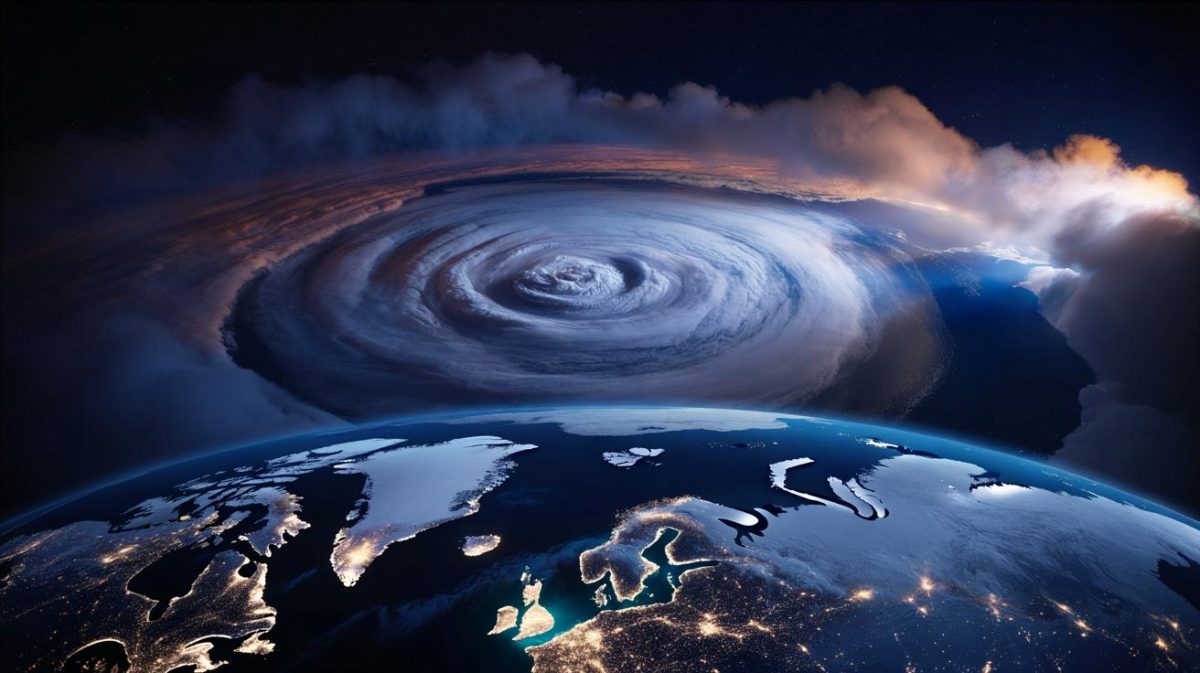
The focus of the research is the polar bears of Svalbard, the Norwegian archipelago in the Barents Sea, roughly midway between mainland Europe and the North Pole. This is not a quiet corner of the climate system. It is one of the fastest-warming regions on Earth.
In parts of the Barents Sea, temperatures have climbed by up to 2°C per decade, far outpacing many other Arctic areas. That surge has hammered the sea ice the bears usually rely on for hunting seals. The Barents region has lost ice more than twice as fast as many other polar bear habitats.
In Canada’s Hudson Bay and Baffin Bay, such conditions have already translated into thinner bears, declining body condition and warning signs for reproduction. Scientists expected a similar pattern in Svalbard.
Instead, while the ice-free season has lengthened dramatically, adult bears in Svalbard have, on average, become heavier and better fed since the late 1990s.
What the 27-year study actually found
Researchers from the Norwegian Polar Institute analysed nearly three decades of data, collected between 1992 and 2019. Over that period, they recorded 1,188 sets of body measurements from 770 adult polar bears, repeatedly capturing, weighing and examining individuals throughout the archipelago.
They looked at metrics such as body mass, length and a composite index of body condition used to assess fat reserves. These were then matched with satellite records of sea-ice cover, in particular the number of ice-free days each year around Svalbard.
In less than 30 years, the number of days without sea ice in key parts of the bears’ range grew by about 100. That’s a huge change for an animal evolved to hunt almost exclusively from floating ice.
At first, things went as expected. Between the mid-1990s and around 2000, average body condition worsened. Then, something shifted. From the early 2000s onwards, as sea ice continued to retreat, the physical condition of many bears stabilised and then improved.
Compared with the 1990s, Svalbard’s polar bears after 2000 were, on average, fatter and in better overall condition, despite having significantly less sea ice to hunt from.
The secret weapon: flexibility and a broader menu
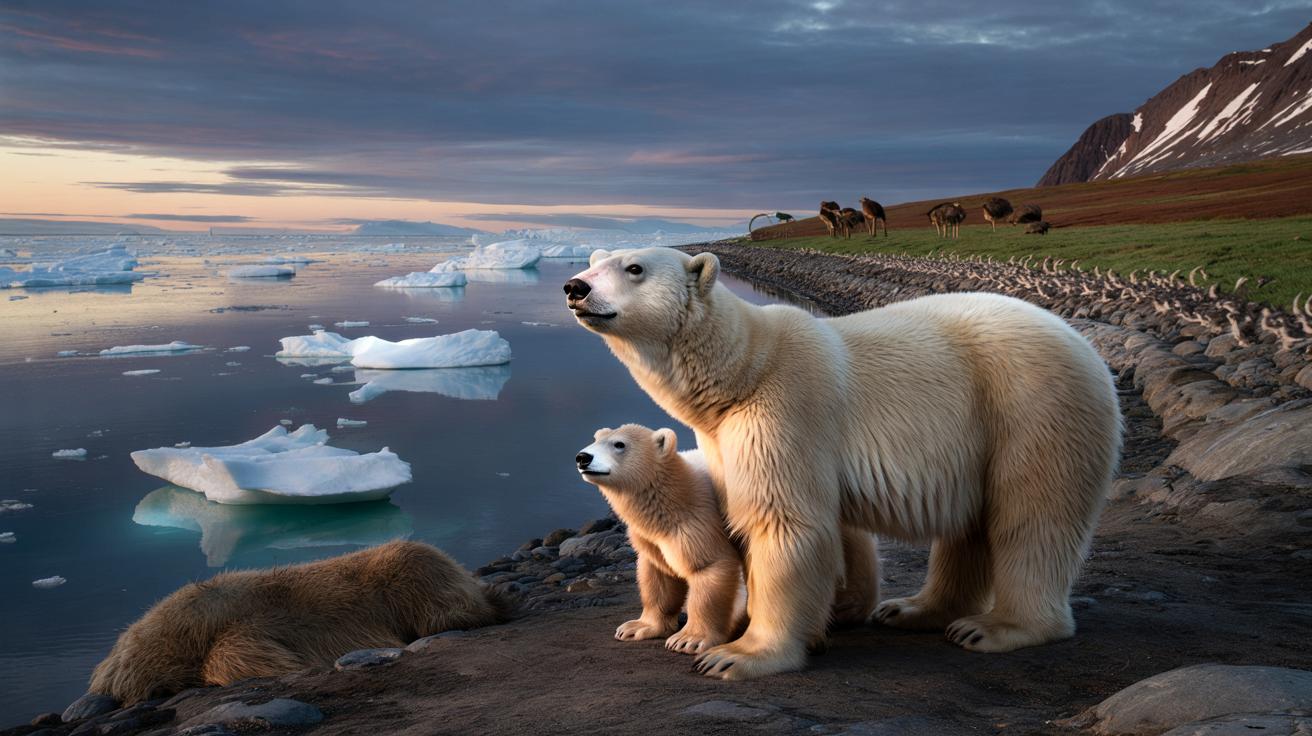
The study suggests that the Svalbard bears are not “winning” against climate change, but they are proving far more flexible than expected. Rather than waiting at seal breathing holes on the ice, many have shifted at least part of their hunting strategy to land.
From sea ice to shorelines
As the summer ice retreats earlier and returns later, bears are spending more time onshore. There, they are turning to alternative food sources that were once just occasional snacks but are now becoming central parts of their diet.
Key items in this new menu include:
- reindeer, either hunted directly or scavenged as carcasses;
- eggs and chicks from seabird colonies on cliffs and islands;
- walrus carcasses and other stranded marine mammals;
- harbour seals and other seals that use coastal waters rather than solid ice.
Field teams have documented more bears roaming seabird colonies in western Svalbard during the nesting season, stripping nests and taking advantage of dense clusters of eggs and chicks. In eastern Svalbard, an increasing number of adult females are spending extended periods in areas rich in seabirds rather than following the retreating ice edge offshore.
With fewer opportunities to catch seals on the ice, the bears are compensating by switching landscapes and treating almost anything edible — from reindeer to seabird eggs — as fair game.
Why Svalbard’s bears are not like all the others
Ecologically, Svalbard is a bit of an Arctic anomaly. It offers an unusual mix of marine and terrestrial food sources packed into a relatively compact area. That combination gives adaptable predators like polar bears more options than they might have in flatter, simpler landscapes.
| Local factor | Possible benefit for Svalbard bears |
|---|---|
| Resident reindeer population | Provides an alternative source of meat on land when seal hunting is poor |
| Large seabird colonies | Offers a seasonal windfall of eggs and chicks in high densities |
| Walrus and other marine mammal carcasses | Delivers high-energy food with limited hunting effort |
| Complex coastline and fjords | Creates many small niches where bears can find varied prey |
In many other parts of the Arctic, polar bears do not have the same buffet of options. There may be fewer reindeer, smaller or more scattered seabird colonies, and less overlap between land-based prey and areas where bears traditionally roam.
Researchers stress that the Svalbard results do not overturn the broader concern for the species. Global sea-ice loss continues, and polar bears as a whole remain tightly tied to that ice for the bulk of their hunting.
Even in Svalbard, the basic rule has not changed: polar bears are an ice-dependent species in a rapidly shrinking ice world.
Short-term relief does not guarantee long-term safety
The positive spin on body condition masks a more complicated picture. The study looked primarily at the physical state of adult bears, not at the full dynamics of the population.
Several key questions remain open:
- How many bears are there in total, and is that number rising or falling?
- Are females producing as many cubs as in the past?
- Are cubs surviving to adulthood at healthy rates?
- What happens over multiple generations of bears raised with little or no summer ice?
In many wildlife populations, a slide in body condition usually appears before a clear population crash. In Svalbard, the pattern may be reversed: bears look robust on the outside, while slower processes such as lower cub survival could still be quietly undermining long-term prospects.
What scientists mean by “body condition”
“Body condition” is a technical term biologists use to describe energy reserves, not aesthetics. For polar bears, good body condition typically means thick fat stores under the skin and around organs, which act as both insulation and fuel.
A well-conditioned bear is more likely to:
- fast for weeks or months between successful hunts;
- carry a pregnancy to term and support implantation of embryos;
- produce richer milk and nurse cubs for longer;
- cope with long-distance movements as ice patterns change.
In Svalbard, the fact that many adults still carry substantial fat suggests that, for now, their new foraging habits are covering the energy gap left by retreating sea ice. But that does not mean the gap cannot widen further.
If the ice-free period lengthens by yet another month or two, the question is whether eggs, reindeer and carcasses can keep filling that gap for all bears, every year.
Future scenarios: resilience under pressure
Looking ahead, researchers outline several plausible trajectories for Svalbard’s bears if warming in the Barents Sea continues.
- Bears might rely even more heavily on terrestrial prey, intensifying competition both among bears and with other predators.
- Reindeer herds and seabird colonies could come under intense pressure, potentially collapsing if predation and climate stress combine.
- Bears could move closer to settlements, research stations and tourist sites, increasing the risk of dangerous encounters.
- There may be seasonal “bottlenecks” when neither sea ice nor land-based food provides enough energy for all animals.
Another subtle concern is the quality of the fat that bears are now putting on. A seal-heavy diet delivers a particular balance of fats and nutrients that polar bears have evolved to use. A shift towards birds, reindeer and scavenged meat could alter that balance in ways that are not yet fully understood, especially for pregnant females and growing cubs.
That is one reason long-term monitoring matters. Tracking the same regions, and where possible the same individuals, over many years can reveal whether the current “healthy” appearance reflects a stable adaptation or a brief plateau before a more abrupt decline.
What this case teaches about climate impacts on wildlife
The Svalbard story highlights how climate impacts rarely play out in uniform, predictable ways. The same species, facing the same broad pressure — rapidly shrinking sea ice — can show starkly different outcomes depending on local geography and available resources.
For conservation, that means two things at once: cutting greenhouse gas emissions to slow sea-ice loss, and protecting key Arctic areas where rich, varied ecosystems offer at least some breathing space for adaptable predators. Svalbard, with its mix of reindeer herds, seabird cliffs and marine mammals, is one such refuge today. How long it can stay that way will depend heavily on what happens further south, far from the ice, where the global climate is being set.