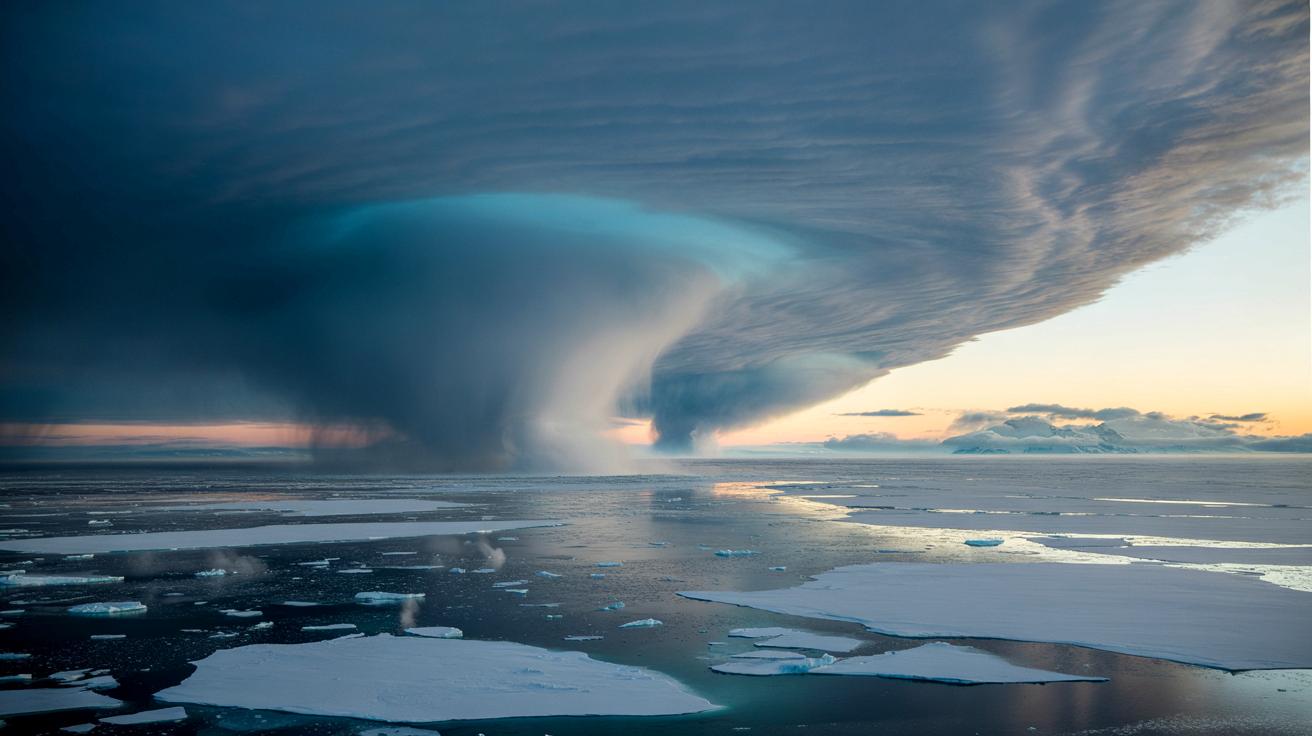
The skies over the Arctic look deceptively calm, yet high above the clouds, winter’s usual rules are starting to bend.
Meteorologists on three continents are tracking an abrupt shift in the polar atmosphere this February, hinting at an Arctic breakdown that could reshape late-winter weather far beyond the frozen north.
What forecasters are seeing above the Arctic right now
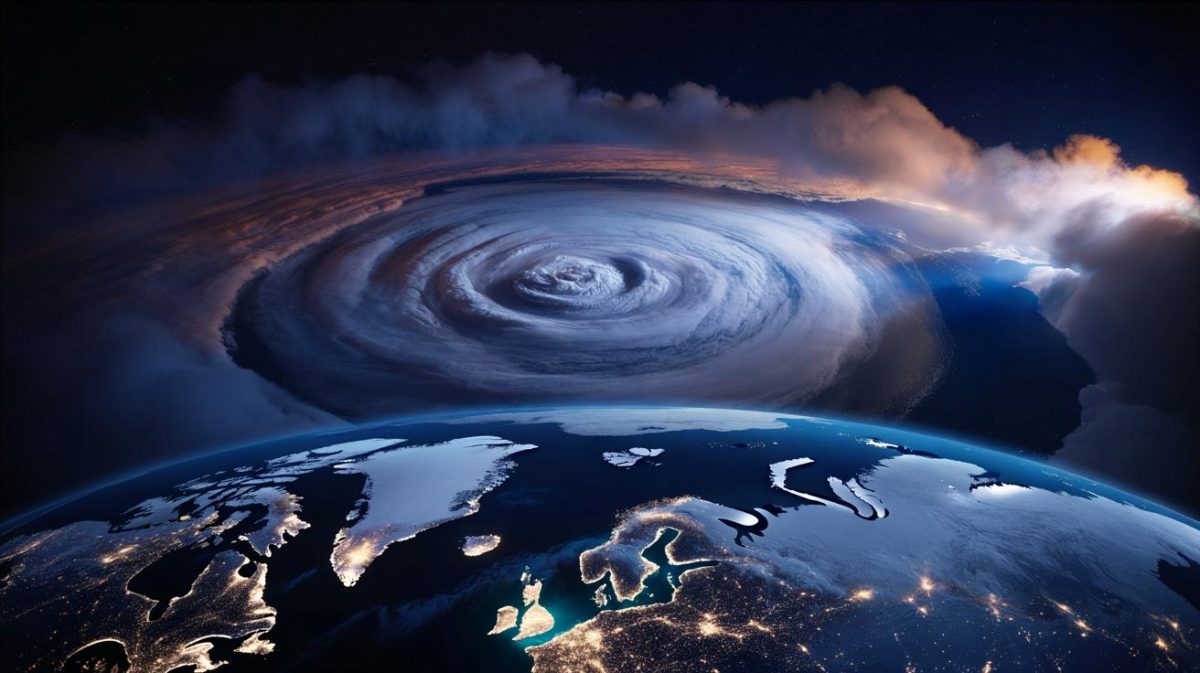
In recent days, satellite images and upper-air charts have revealed something that makes seasoned forecasters uneasy. The tight ring of icy air normally caged over the pole is losing its symmetry weeks earlier than usual.
The polar vortex – a whirl of frigid air in the high atmosphere – is being tugged and stretched out of shape. At the same time, the jet stream, which usually forms a clean band of strong westerly winds, is developing deep kinks and loops.
Meteorological centres report temperature and pressure anomalies over the Arctic that resemble only a handful of winters since detailed records began in the late 20th century.
In practical terms, that means the atmosphere is setting up for “weather whiplash”. The deep cold that belongs over the high Arctic can spill south in bursts, while parts of the far north briefly swing far milder than normal.
Reanalysis datasets used by major weather agencies show that the scale of the disturbance would be unusual even in late winter. Seeing it take shape in mid-February has prompted comparisons with rare breakdown events from the 1980s and 1990s – events that typically arrived later in the season.
How an early Arctic breakdown plays out on the ground
On paper, “Arctic breakdown” sounds like obscure jargon. In daily life, it shows up as wild swings that leave people guessing which season they are in.
Over the past few weeks, parts of North America and Europe have reported record or near-record warmth for early February, followed by sudden returns to freezing winds. In northern Scandinavia, herders are already reporting snow conditions that feel out of step with the calendar. In central and eastern Europe, flowers have pushed up early in some areas, only to face renewed frost.
When the polar vortex becomes distorted, the jet stream can slow and wobble. Weather systems then stall or meander, bringing:
➡️ Psychology confirms it: real inner peace comes when you stop expecting this from others
➡️ Field biologists confirm record-breaking snake during controlled survey in remote forest
➡️ Polar bears in Norway’s Arctic are getting fatter and healthier despite the climate crisis
➡️ According to psychology, life really starts to improve when you stop chasing other people’s approval
- Extended cold spells in some regions
- Unusual warmth and rain in others
- Sharp switches between thaw and freeze
- Heavy, wet snow where the two air masses collide
Forecasters are not predicting the same outcome everywhere, but they agree that the odds of late-winter extremes are rising as this disturbance deepens.
For people, that tends to show up as treacherous roads that thaw, refreeze, and glaze with black ice; slushy snow that turns rock-hard overnight; and power networks strained by a mix of heavy snow, ice loading, and strong winds.
Why this February event stands out from past winters
Early-season vortex disruptions have happened before, yet this year’s signals come on top of a very different background climate. The Arctic is warming around four times faster than the global average, and sea ice coverage has been trending lower for years.
Ice that once formed a thick winter lid over the Arctic Ocean is becoming thinner and patchier. Exposed patches of water release heat into the atmosphere, warming the lower layers and feeding back into the circulation above.
That added energy can weaken the temperature contrast between the polar region and the mid-latitudes. When that contrast softens, the jet stream can lose its usual tightness and become more sinuous.
| Atmospheric factor | What is changing | Likely effect |
|---|---|---|
| Sea ice cover | Lower winter extent and thinner ice | More heat and moisture entering the polar atmosphere |
| Polar vortex | More frequent distortions and early-season disruptions | Greater risk of cold outbreaks and erratic temperature swings |
| Jet stream | Stronger meanders and blocking patterns | Persistent storm tracks and stuck weather regimes |
Some of the atmospheric patterns now appearing in February would once have been expected only once or twice in a generation, and usually later in the season.
Scientists caution that one event does not rewrite the rulebook on its own. Yet they are paying close attention to whether these early breakdowns become more frequent in coming decades as the Arctic warms.
Regions most likely to feel the impact
The precise outcome of this February’s breakdown depends on how the jet stream’s loops settle in the next one to three weeks. Current model runs suggest a higher chance of disrupted conditions across several broad zones:
North America
Large parts of central and eastern North America could face renewed cold snaps after a mild stretch. Where Arctic air collides with lingering warmth and Gulf moisture, forecasters are watching for:
- Heavy snow or ice storms along sharp temperature gradients
- Freezing rain risks in transition zones just north of the warm air boundary
- Strong winds around deep low-pressure systems steered by the bent jet stream
Europe and the UK
Europe often sits near the battleground between polar air and Atlantic influence when the vortex falters. This can mean:
- Short but intense cold spells reaching further south than usual
- Switches between springlike days and biting wind within a week
- Higher odds of heavy, wet snow where cold air undercuts moist Atlantic flows
For the UK and Ireland, the key question is whether northern blocking highs form near Greenland or Scandinavia. Those high-pressure ridges can divert storms and lock in either chillier, drier conditions or stormy, unsettled spells, depending on their exact position.
High-latitude communities
Ironically, some Arctic settlements may see above-average temperatures during parts of this breakdown. Sudden thaws on top of existing snowpacks can create unstable ice on rivers and coastal areas, disrupt travel routes, and complicate hunting and herding activities.
Residents in polar and subpolar regions report that the timing and reliability of snow and ice – once the backbone of their winter planning – are becoming harder to predict.
Living with a winter that can flip in a week
There is no switch to stop an Arctic breakdown halfway through. But the early-warning nature of this phenomenon gives people a chance to adjust habits for a few weeks.
- Think in two-week blocks: when meteorologists flag vortex disruption, treat the coming fortnight as a “high-variance” period.
- Keep winter gear handy even on mild days: coats, hats, and traction aids for shoes can make sudden icy periods less dangerous.
- Check homes for both thaw and freeze: clear drains, check gutters, and protect exposed pipes from a hard refreeze after a warm spell.
- Watch vulnerable neighbours and systems: elderly people, outdoor workers, livestock and local transport tend to struggle first when conditions yo-yo.
For local authorities, this kind of pattern highlights the need for flexible gritting schedules, adaptable flood plans for rain-on-snow events, and robust communication when the forecast shifts sharply within a few days.
Key terms that help make sense of the headlines
The language around these events can sound technical, yet a handful of concepts go a long way.
Polar vortex
The polar vortex is a large-scale circulation of cold air high above the Arctic, mainly in the stratosphere. When strong and centred, it tends to keep the worst of the cold locked near the pole. When it weakens, stretches, or splits, chunks of that cold air can slide south into lower latitudes.
Sudden stratospheric warming
A sudden stratospheric warming, often shortened to SSW, is a rapid temperature spike in the stratosphere above the pole. It can flip the usual wind pattern there and often precedes a polar vortex disruption. The surface response usually unfolds over one to three weeks, changing storm tracks and temperature patterns.
Jet stream
The jet stream is a fast-moving river of air in the upper atmosphere that steers weather systems. A straight, strong jet tends to bring quick-moving, relatively predictable patterns. A wavy jet can trap systems in place, leading to persistent rain, prolonged cold, or extended mild spells depending on the region.
What the next few weeks could look like
Weather models are not unanimous, but scenario planning gives a sense of what this February’s Arctic breakdown might bring:
- Scenario 1 – Repeated cold shots: Arctic air masses surge south several times, each followed by shorter thaws. Energy demand spikes, transport is disrupted, but snow cover builds where precipitation aligns with the cold.
- Scenario 2 – One strong, brief plunge: A sharp cold wave strikes for a few days, then retreats. Ice and snow cause short-lived problems, yet the broader season still finishes milder than average.
- Scenario 3 – Mild but stormy: The main lobe of cold air targets another continent, leaving some regions under a strong, wet jet. Flood risks take centre stage instead of deep frost.
For individuals, none of these require panic. They do point towards staying nimble. A small stock of shelf-stable food, charged power banks, and a torch can turn an unexpected 24–48 hour power cut from a crisis into an inconvenience, especially during a cold snap.
As researchers sift through this winter’s data, one open question hangs over the charts: are these early-season Arctic breakdowns becoming part of a new rhythm, or will they remain rare outliers? The answer will not arrive this month. For now, the signals are clear enough for meteorologists to issue the same advice across continents – pay attention when the Arctic starts to wobble, even if the sky outside still looks calm.