<strong>One April morning, a tired back, a muddy plot and a single decision quietly flipped an entire way of gardening on its head.
The spade stayed in the shed, the soil stayed undisturbed, and what began as an experiment slowly turned into a different relationship with the garden. Less brute force, more observation. Fewer weekends lost to back-breaking work, more baskets filled with calm, healthy vegetables.
From ritual to rethink: why the spade stayed put
In many gardens, deep digging every spring is almost ceremonial. The ground gets turned, clods are broken, beds are re-shaped. It feels like “proper” work. Yet that yearly reset comes with a price: aching muscles, compacted layers underneath, and a soil ecosystem scrambled just as it was starting to stabilise.
The gardener in our story simply stopped. Not out of laziness, but out of curiosity. What would happen if the soil was treated less like a lump of material and more like a living community? What if the underground networks of roots, fungi and earthworms were allowed to keep building instead of being smashed apart once a year?
The shift was clear: the soil stayed softer, water sank in instead of running off, weeds lost strength and the plants looked… calmer.
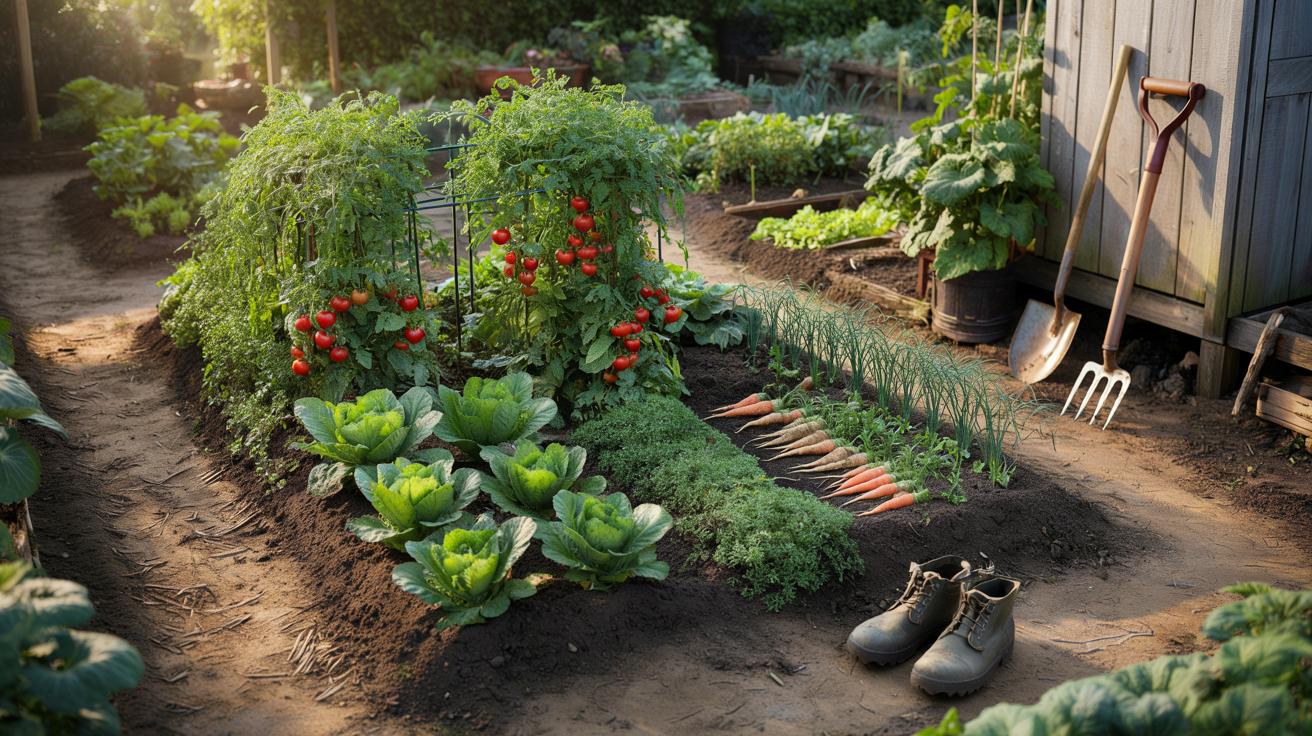
That first year, only a test area was left undug: three modest beds, about 75cm wide, covered with 8–10cm of shredded leaves and bark, plus a thin layer of compost. Tomatoes, beans and lettuces were planted through small holes in the mulch.
By July, when nearby plots were baking and cracking, that test corner still held moisture well below the surface. Watering sessions dropped dramatically, yet yields held up. The fruits came out clean, with fewer stress cracks and less disease. It felt less like a battlefield, more like a steady conversation between plants and soil.
What digging really does to your soil
Traditional digging aims to “loosen” the earth, but the effect is short-lived. Clods may break, yet the microscopic structure that holds air, water and nutrients together is shattered each time.
When you flip the soil:
- You break down stable aggregates that store moisture and oxygen.
- You drag buried weed seeds to the surface and give them light to germinate.
- You trigger a quick flush of nutrients that soon crashes, leaving plants hungry.
It is like asking a theatre cast to rebuild the stage from scratch before every performance. The show goes on, but the energy wasted is enormous.
➡️ Polar bears in Norway’s Arctic are getting fatter and healthier despite the climate crisis
Soil is not a solid block; it is a densely populated city of microbes, worms and fungal threads, constantly building and repairing.
A no-dig or low-dig approach lets that city stabilise. Earthworms forge tunnels for drainage. Fungal networks link plant roots and share nutrients. Bacteria process organic matter into slow, steady fertility. Instead of controlling everything with metal and muscle, the gardener starts working with that underground workforce.
How a no-dig vegetable garden is set up
The practical change looks simple from the surface. Instead of turning the soil, you build on top of it.
Permanent beds and strict walkways
The garden described in the original Italian piece is laid out in fixed beds about 75cm wide, with 40cm paths in between. The rule is strict: feet only in the walkways, never on the beds. That alone cuts compaction massively.
To start a new bed, especially on weedy ground, a layer of plain brown cardboard is laid down to smother perennial weeds. On top of that go dry grass clippings or leaves, then 8–10cm of heavier mulch such as fine wood chips. A final 2–3cm of mature compost forms the planting surface.
Eight centimetres of mulch can completely change how a bed behaves: cooler in heatwaves, softer after rain, and far easier on the hands.
Planting is done with a dibber or trowel pushed through the mulch into the soil below. For direct sowing (carrots, salads, spinach), the compost layer acts as a seedbed, with the mulch gently parted or kept thinner where seeds go.
Typical no-dig routine at a glance
| Practice | How it’s done | Why it helps |
|---|---|---|
| Mulch layer | 8–10cm organic material, topped up once or twice a year | Suppresses weeds, preserves moisture, feeds soil life |
| Permanent beds | 75cm beds, 40cm paths, no stepping on beds | Prevents compaction, keeps structure and drainage stable |
| Surface compost | 2–3cm on top, not dug in | Slow-release nutrition, mimics natural leaf litter |
| Gentle aeration | Occasional broadforking without flipping soil | Adds air in heavy soils without destroying layers |
The mistakes that teach you the method
No-dig is not a magic trick. It comes with its own learning curve.
Use too much fresh wood chip right on the surface and it can temporarily “lock up” nitrogen while microbes break it down. The fix is simple: pair woodier mulches with compost or well-rotted manure and keep the thickest layers between plants, not right against delicate stems.
Use the wrong cardboard and you block air gaps or leave plastic fragments in the soil. Plain, uncoated, brown cardboard is fine. Glossy boxes with plastic tapes are not. Overlap the pieces so weeds cannot slip through the cracks and always cover with organic matter so the cardboard stays damp and breaks down.
On heavy clay, skipping all intervention can backfire in a wet spring. The broadfork or a similar tool becomes a compromise: tines are pushed in and gently rocked back to create channels, but the layers are not flipped. Roots and worms take it from there.
A management style that lets the garden breathe
What changes most in a no-dig system is not just the soil structure, but the gardener’s weekly rhythm. Hours once given to deep digging shift towards short, regular check-ins.
Instead of a single exhausting “start of season” blitz, the work breaks down into small, repeatable actions: sprinkling compost around a crop, topping up mulch where it has thinned, slicing young weeds with a sharp hoe before they toughen up, watching how water behaves after a storm.
Simplicity in the garden is not laziness; it is a conscious choice to let biology handle the heavy lifting.
Many gardeners who adopt this approach speak of a different kind of satisfaction. Less pain in the lower back, fewer emergency watering sessions, and a more predictable harvest. Bed edges stay defined, tools stay cleaner, and the soil looks and smells richer with each passing season.
Four quiet rules behind a lower-effort, higher-yield plot
- Do a little, often: short sessions keep everything moving without drama.
- Keep soil covered: bare earth dries out, erodes and invites weeds.
- Respect the beds: walk only in the paths to avoid compaction.
- Feed from the top: add organic matter on the surface and let life drag it down.
Common worries about no-dig, answered
“My soil is heavy clay. Can I really stop digging?”
On tough, sticky soils, a staged approach works best. In the first year, use a broadfork or garden fork to open channels without inverting the layers, then apply a generous mulch and a couple of centimetres of compost. By autumn, you usually see fewer crusted surfaces and finer crumbs forming. Over time, roots and worms keep those channels open more reliably than any spade.
“Will cardboard suffocate the soil?”
Plain brown cardboard, used in one layer and covered with organic material, lets air and moisture pass. It acts as a temporary light barrier that weakens weeds and then decomposes. The key is to avoid plastic-coated cartons and sticky tapes, and not to stack cardboard too thick. Think breathable blanket, not plastic sheet.
“What about slugs hiding under the mulch?”
Slugs do enjoy damp cover. The trick is in how and where you apply mulch. Around delicate young seedlings, keep the layer thinner and drier, using straw or crisp leaves rather than fine, moist chips. Water in the early morning so surfaces dry by night. Simple traps, like wooden boards on the path, can concentrate slugs in one place for hand removal. Encouraging predators such as frogs, beetles and hedgehogs with small water dishes and wild corners creates longer-term balance.
Practical examples for different crops
Root crops and potatoes often worry gardeners moving away from deep digging. Yet they can work surprisingly well.
- Potatoes: Lay seed potatoes on the soil surface and cover with 15–20cm of mulch. Top up as stems grow to keep tubers in the dark. At harvest, lift the mulch and pick potatoes by hand, with minimal disturbance.
- Carrots and parsnips: Maintain a fine layer of compost on top of the bed for sowing, with thicker mulch kept between the rows. On clay, a light dusting of sand on the surface can help with straight rows and drainage.
For fast crops like salads and radishes, the no-dig system shines. Seeds go into a crumbly compost layer, roots find stable moisture beneath, and the gardener simply clears residues and adds a thin new topping before the next sowing.
Extra gains: water, climate and your own energy
A side effect of not turning the soil is better water management. Mulch reduces evaporation, and intact structure allows rain to sink in instead of sliding away. In dry summers, this can mean the difference between plants surviving on a hosepipe ban and collapsing in a heatwave.
There is also a carbon story here. Disturbed soil releases stored carbon dioxide. Leaving it intact and feeding it from above tends to lock more carbon underground in the form of long-lived organic compounds. On a home scale this is modest, but across many gardens and small farms it adds up.
For the gardener, the biggest change is psychological. The spring panic eases. Work spreads through the year in manageable doses. The garden looks busy, but you are less exhausted. That quiet decision to stop digging every April does not just grow more tomatoes; it grows a different way of spending time outdoors, with a plot that slowly learns to look after itself as you learn to step back.