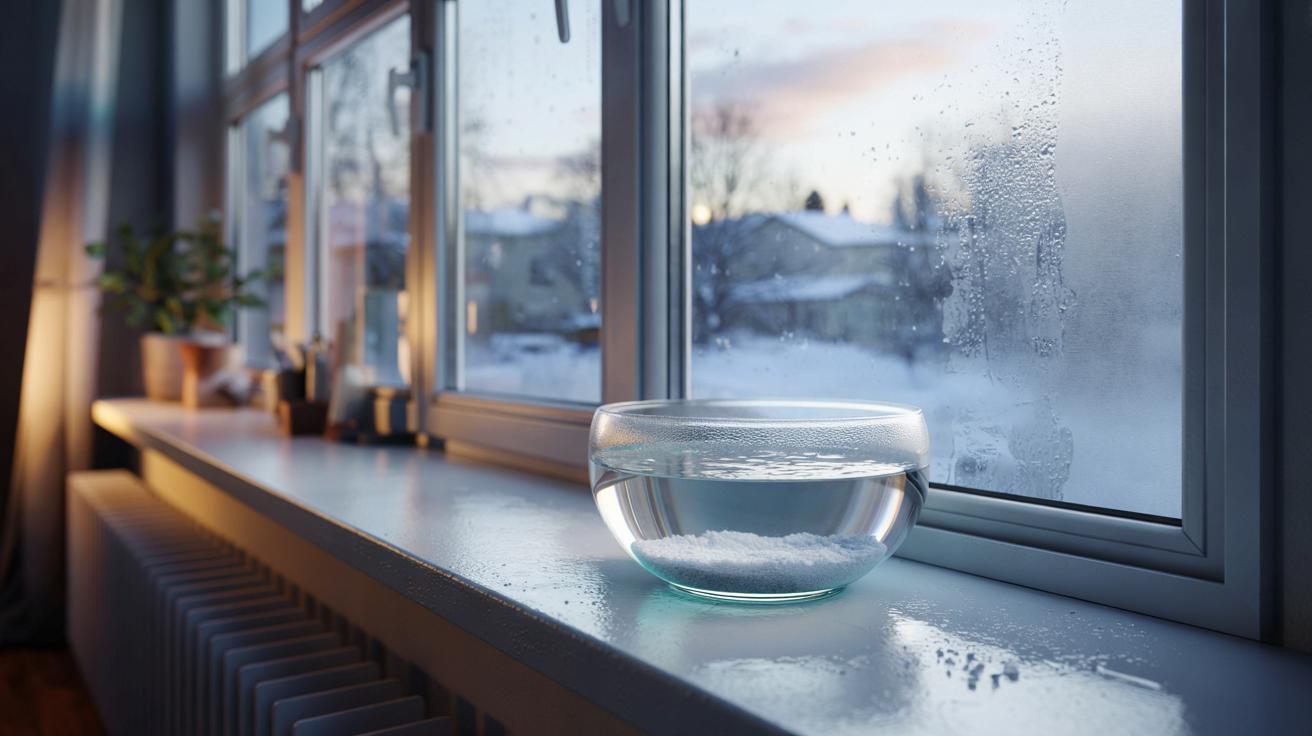
Outside the glass, pavements freeze and breath turns white; inside, the windows sweat and the air feels oddly heavy.
As radiators roar into life and we seal our homes against the cold, a quiet battle starts on the windowpanes. One surprisingly low‑tech habit – a bowl of salty water on the sill – is gaining fans as a winter twin to the aluminium foil so many people tape to their windows in scorching summers.
Why your winter windows turn into water magnets
Once the cold sets in, most of us do the same thing: shut every window, pull the curtains tight, and crank up the heating. The problem is, all the moisture we create has nowhere to go.
Boiling pasta, taking hot showers, drying laundry indoors, even just sleeping – each activity pumps water vapour into the air. That damp air then makes a beeline for the coldest surfaces in the room. Almost always, that means the glass.
You notice it first thing in the morning. A fringe of droplets along the bottom of the pane. Beads of water sliding down the frame. Sometimes, if you wipe it with your sleeve, it feels like the window has cried all night.
Left unchecked, that condensation does more than smear the view. It feeds mould spores lurking in the corners, under rubber seals and behind curtains. Over weeks, dark patches creep across silicone and paintwork, bringing musty smells and potential breathing issues along with them.
Condensation on the glass is more than a nuisance; it’s an early warning of a room that’s slowly turning too damp for comfort.
How a bowl of salt water quietly changes the script
Sodium chloride – everyday table salt – is hygroscopic. That means it attracts and holds onto water molecules from the air. When salt sits in water, it still keeps this pull. Placed by a cold window, the mixture behaves a bit like a tiny, passive dehumidifier.
The logic is simple: warm, moist indoor air brushes past the cold pane. Instead of all that moisture landing straight on the glass, part of it is “caught” by the salty solution, which slowly absorbs it. The effect is local, right around the window, but that’s exactly where condensation hits hardest.
Think of the area by your window as a mini climate zone. It’s colder, often poorly ventilated, and shaded by curtains or blinds. The bowl of salt water changes the balance in that small pocket of air, shaving off some of the excess humidity before it can turn into droplets.
➡️ Polar bears in Norway’s Arctic are getting fatter and healthier despite the climate crisis
➡️ Field biologists confirm record-breaking snake during controlled survey in remote forest
➡️ Psychology confirms it: real inner peace comes when you stop expecting this from others
Positioned on the sill, the bowl works continuously – a silent helper that never needs plugging in or programming.
Step‑by‑step: using salt water as “winter foil” for your panes
The method costs pennies and takes less than a minute to set up. The details, though, matter.
Setting up your homemade moisture trap
- Pick the right container
Use a wide, shallow bowl or dish, ideally glass or ceramic. The larger the surface, the more air the mixture can interact with. - Mix water and salt
Fill the bowl halfway with tap water. Add a thick layer of coarse or rock salt and stir briefly, leaving some grains undissolved at the bottom. - Place it at the frontline
Set the bowl on the windowsill, as close to the glass as you safely can. One bowl per window works best in very damp spaces. - Let the air reach it
Avoid hiding it behind thick curtains or blinds that barely move. The air needs to circulate around the bowl for the trick to work.
Several small mistakes can make people swear this is useless: using an espresso cup instead of a bowl, forgetting it in a corner with no airflow, or leaving it there for months without renewing the salt.
Basic maintenance so the salt keeps working
Over days, the salt will dissolve more fully and the water will look cloudy. Crusts may form around the rim of the bowl as moisture accumulates and then evaporates.
| Sign | What it means | What to do |
|---|---|---|
| No visible salt crystals left | Solution is saturated | Empty and refill with fresh water and salt |
| Heavy crust on edges | Moisture has been absorbed then dried out | Rinse the bowl and restart the mixture |
| Strong musty smell nearby | Damp problems extend beyond the window | Combine the bowl with better airing and cleaning |
Refreshing the bowl every one to two weeks is usually enough. In very humid rooms – small bathrooms, laundry spaces – you may need to change it more often.
Salt in winter, foil in summer: same battlefield, different enemy
On scorching days, people tape aluminium foil or reflective film to south‑facing windows. The idea is simple: bounce the heat away before it floods the room. It might look like a budget sci‑fi set from the street, but the tactic works because it treats the problem at the glass.
In winter, the threat flips. Instead of sunlight roasting your living room, it’s moisture saturating the air and clinging to the panes. The bowl of salty water is like the cold‑season cousin of that foil: one reflects heat, the other absorbs damp, both stationed at the same fragile barrier between inside and out.
Summer’s foil and winter’s salt bowl share a single principle: tackle the discomfort where it begins, right at the window.
Where this trick shines – and where it doesn’t
Best rooms for a salt bowl
- Small bedrooms where windows mist up overnight.
- Kitchens without extractor fans, especially if you cook often.
- Bathrooms with poor ventilation or no external window.
- Rooms where laundry regularly hangs on racks to dry.
In these spaces, even a modest reduction in humidity around the glass can slow mould growth on frames and seals. You may notice less water pooling on the sill and paintwork staying intact for longer.
Limits you should keep in mind
A bowl of salt water will not fix a home with structural damp, leaky roofs or soaked walls. It will not replace a powerful electric dehumidifier in a flooded basement. What it offers is targeted, low‑effort help in otherwise healthy but slightly steamy rooms.
Think of it as part of a toolkit, not a miracle cure. If you already struggle with asthma, allergies or recurring mould infestations, you still need ventilation, proper cleaning and, in some cases, professional assessment.
Boosting the effect with small daily habits
Paired with common‑sense routines, the bowl becomes far more effective than when it works alone. A few habits make a big difference:
- Open windows wide for 5–10 minutes once or twice a day to let moist air escape.
- Use saucepan lids and extractor hoods while cooking.
- Keep bathroom doors closed during hot showers, then air out the room afterwards.
- Avoid drying heavy loads of clothes in the smallest room of the house.
Short, sharp ventilation cycles cool the air slightly but remove a large amount of moisture. The salt bowl then helps stabilise that newly drier air near the glass, keeping condensation peaks lower.
Questions people ask about salt, damp and comfort
Is this really cheaper than using a plug‑in dehumidifier?
Salt is inexpensive and uses no electricity, so running costs are tiny. Electric dehumidifiers pull far more moisture out of the air but add to your energy bill. Many households choose both: a dehumidifier for very damp days, and salt bowls to keep trouble spots in check the rest of the time.
What type of salt works best?
You do not need anything fancy. Coarse kitchen salt, rock salt or bagged de‑icing salt all behave in much the same way for this purpose. Fine table salt works too, but larger grains are easier to handle and tend to dissolve more slowly, giving a more visible sign of change.
Any risks around children and pets?
The main concern is ingestion or spills. Cats may try to drink from the bowl, and dogs will happily lap up salty water, which is not good for them in large amounts. Place bowls where pets cannot reach and where small children cannot knock them over. If a spill happens, wipe it promptly so salt does not sit on wooden sills or floors for long.
Understanding what’s really happening: a quick humidity primer
Behind this simple trick sits a basic concept: relative humidity. That’s the percentage of water vapour the air holds compared with the maximum it could hold at that temperature. Cold air holds less moisture than warm air. When warm, moist air hits a cold surface, it cools down fast, can no longer hold as much water, and the excess becomes droplets.
By quietly lowering the amount of moisture near the window, the salt bowl raises the threshold at which water starts condensing on the glass. You might still see a little mist on the coldest mornings, but far fewer streams of water running down the frame.
Practical scenarios where a bowl makes a visible difference
Imagine a couple in a small city flat, sleeping with the door closed and the radiator under the window. Each night, their breathing alone adds moisture. With no ventilation, the window becomes opaque by sunrise, and black spots appear under the rubber seal within weeks.
Add a wide bowl of salt water on the sill and a short morning airing routine, and the change is noticeable: thinner condensation lines, drier frames, and mould growth that slows or stops altogether. The trick will not turn the bedroom into a desert, but it nudges the room back towards a healthier balance.
Or picture a rented bathroom with no outside window, just a small fan that no one bothers to run. Steam from daily showers clings to tiles and the only tiny internal pane. A salt bowl placed away from direct splashes, refreshed weekly, will not eliminate fogged mirrors, yet it can ease that slightly swampy feeling and stop water from constantly dripping from the window ledge.
When to step up from bowls to bigger interventions
If you see paint peeling, wallpaper bubbling, or mould spreading beyond window areas, simple bowls of salt will not be enough. Those signs point to deeper issues: poorly insulated walls, cold bridges, or water ingress from outside. In those cases, the salt bowl is still harmless and may protect specific spots, but you need stronger measures – from improving insulation to upgrading ventilation systems.
For many households though, especially in small rented flats where big renovations are off the table, that humble dish on the sill is one of the few tricks you can actually use right now. It asks little: just tap water, cheap salt, and a regular glance to see when it needs a refresh. In return, your windows may start each morning a touch clearer, your air a bit less sticky, and winter indoors slightly more bearable.